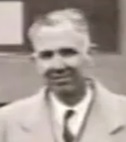
Paul Richard Hill was a respected aerodynamicist and research engineer with NACA (the predecessor to NASA) and later NASA itself. He worked on advanced aircraft and propulsion concepts for decades. After two personal UFO sightings (one in 1952, officially reported to Project Blue Book), Hill quietly became one of the most technically rigorous independent analysts of Unidentified Flying Objects. He built and flew one of the earliest “flying platforms” to replicate the tilt-to-control flight behavior reported in many UFO cases. For over 25 years he served as an unofficial clearinghouse at NASA for sighting reports, focusing on performance characteristics, propulsion possibilities, and flight dynamics. His groundbreaking book, Unconventional Flying Objects: A Scientific Analysis, was published posthumously in 1995. In it, Hill demonstrates that the flight behavior of genuine UFOs is consistent, measurable, and fully compatible with known physics — suggesting the technology is not only explainable but potentially attainable.
Key Contributions to the Field
- First scientific analysis of UFO performance data by a working aerospace engineer
- Demonstrated that UFOs “obey, not defy” the laws of physics
- Developed practical models (including tilt-to-control platforms) that matched eyewitness reports
- Strong advocate for the extraterrestrial hypothesis for a subset of well-documented cases
- Influenced generations of researchers with data-driven, engineering-focused approach
Notable Work
Unconventional Flying Objects: A Scientific Analysis (1995, Hampton Roads Publishing)
Widely regarded as one of the most technically sound books ever written on the subject. Features detailed physics breakdowns, performance charts, and propulsion hypotheses. A must-read for serious researchers.
Paul Hill represents the rare bridge between mainstream aerospace science and serious UFO study. His background at NASA gives his conclusions weight that most researchers lack. His work remains essential reading for anyone seeking a rational, physics-based understanding of advanced aerial phenomena.
Continues to be cited by ufologists, physicists, and disclosure advocates worldwide.